Conversion rate optimization (CRO) is the systematic process of raising the percentage of website visitors who take a desired action: buying, calling, or submitting a form. The average website converts 2% to 3% of visitors, so most sites have real headroom, and closing even part of that gap produces more customers from the same traffic.
The published numbers make the case. WordStream's landing page study puts the median at 2.35%, with the top 25% of pages above 5.31% and the top 10% above 11.45%. Portent's speed research found pages loading in one second convert about three times better than pages taking five. Industry benchmarks put the average ROI of structured CRO programs at 223%, and marketers who prioritize CRO are 3.5x more likely to report revenue growth.
The money angle is simple. You are already paying to get people to your website, through SEO, Google Ads, or social media. If those visitors leave without buying, calling, or filling out a form, the money spent to attract them is wasted. CRO is how you fix that.
Key Takeaway
Conversion rate optimization (CRO) increases the percentage of website visitors who take a desired action, such as purchasing, submitting a form, or calling. The average website converts 2% to 3% of visitors. Even a 1% improvement in conversion rate can mean significantly more revenue from the same amount of traffic, making CRO one of the highest-ROI marketing activities a business can invest in.
What Is Conversion Rate Optimization?
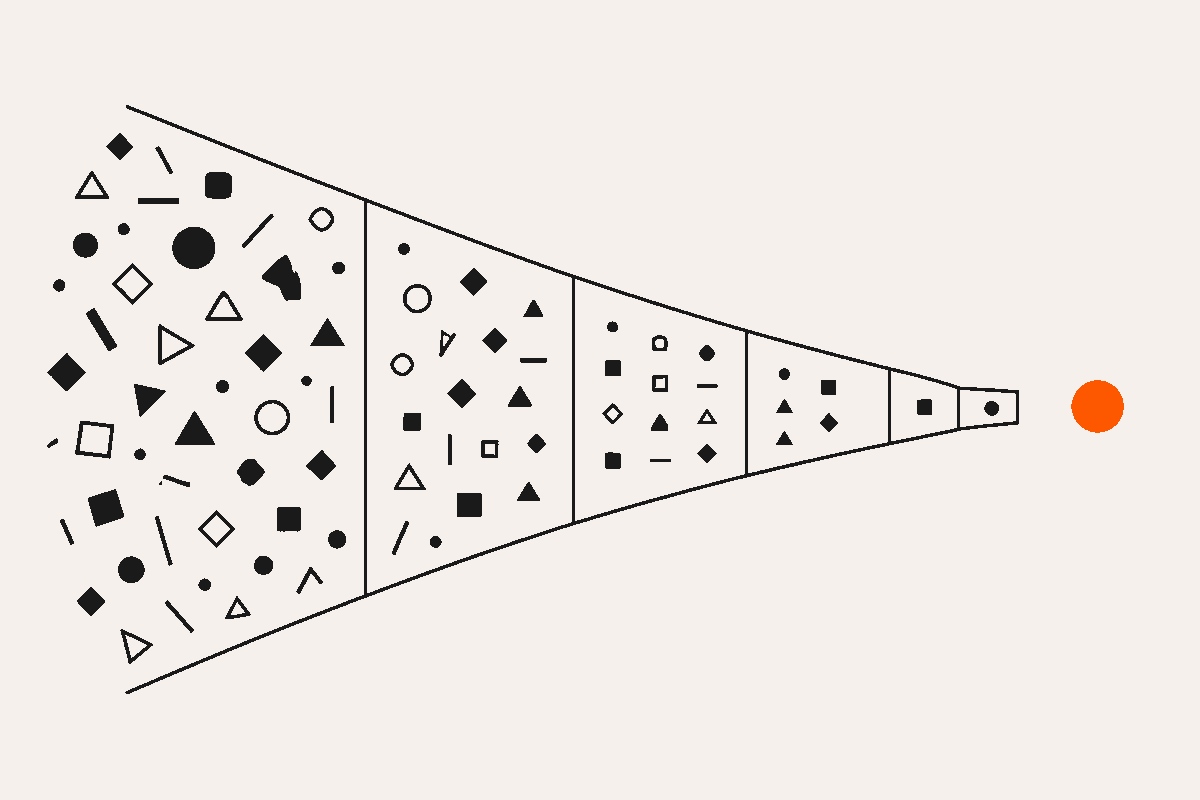
Conversion rate optimization is the practice of improving a website so a higher percentage of visitors take a specific action, called a conversion. For an e-commerce store that is usually a completed purchase; for a service business, a contact form submission or phone call; for a SaaS company, a free trial signup.
The formula is straightforward: Conversion Rate = (Number of Conversions / Number of Visitors) x 100. If 1,000 people visit your website in a month and 30 of them fill out your contact form, your conversion rate is 3%.
CRO uses data, user behavior analysis, and testing to identify what prevents visitors from converting and then fixes those problems. It is not guesswork. Every change is measured, and the results tell you whether it worked. This data-driven approach separates CRO from generic website redesigns where changes are based on preferences rather than evidence.
Why Does CRO Matter?
CRO matters because it multiplies revenue without new ad spend. A site with 10,000 monthly visitors, a 2% conversion rate, and a $500 average sale produces $100,000 a month; lifting conversion to 4% doubles that to $200,000 from the same traffic. No extra advertising dollar gets spent anywhere in that math.
That math is why the returns on CRO are so high. The work improves the efficiency of every marketing dollar already being spent, which is what the 223% average ROI figure and the 3.5x revenue-growth correlation from the intro are measuring.
Doubling your traffic and doubling your conversion rate both produce the same result: twice as many customers. But doubling traffic means doubling your ad spend. Doubling your conversion rate costs a fraction of that because you are working with the visitors you already have.
CRO also compounds with every other marketing channel. When your SEO drives more organic traffic, a better conversion rate means more of that traffic converts. When your Google Ads bring in paid clicks, each click is more likely to produce a sale. Every channel you invest in performs better when your website is optimized to convert.
What Is a Good Conversion Rate by Industry?
The global average website conversion rate is 2% to 3%. Food and beverage sites lead near 6.2%, professional services average 3.5%, and B2B software trails at 1.8%. A site converting above 3.2% ranks in the top 20% of all websites, and above 4.7% is top 10%.
| Industry | Average Conversion Rate |
|---|---|
| Food & Beverage | 6.2% |
| Personal Care & Beauty | 6.8% |
| Health & Wellness | 4.2% |
| Professional Services | 3.5% |
| Home & Garden | 2.8% |
| B2B / SaaS | 1.8% |
| Fashion & Apparel | 1.9% |
| Luxury Goods | 1.0% |
Traffic source also matters. Organic search and email traffic convert at 2.5% to 3% on average, while social media traffic typically converts under 1%. Desktop visitors convert at roughly 4.8%, compared to 2.9% for mobile visitors. These gaps represent CRO opportunities. If your mobile conversion rate lags significantly behind desktop, your mobile experience likely needs work.
Use these benchmarks as directional guidance, not absolute targets. A luxury retailer at 1.5% may be outperforming its market, while a food delivery site at 3% may be underperforming.
How Does the CRO Process Work?
The CRO process is a five-step loop: collect data on how visitors use the site, form a hypothesis about one specific barrier, run an A/B test against the current page, implement the version that wins with statistical confidence, and repeat. Each cycle typically takes two to four weeks.
Step 1: Collect and Analyze Data
Before changing anything, you need to understand how visitors currently use your site. Google Analytics shows you where visitors enter, which pages they visit, where they leave, and how long they stay. Heatmaps show where people click, scroll, and hover. Session recordings let you watch real user behavior. Together, these tools reveal where your site is losing people.
Step 2: Form a Hypothesis
Based on the data, identify a specific problem and propose a solution. A good hypothesis follows this format: "If we change [specific element], then [expected outcome] will happen, because [reason based on data]." For example: "If we reduce the contact form from 8 fields to 4, form completions will increase, because session recordings show 60% of users abandon the form after the fourth field."
Step 3: Design and Run a Test
Create a variation of the page with your proposed change and split your traffic between the original (control) and the new version (variation). This is an A/B test. Run the test until you have enough data for statistical significance, which typically means at least 1,000 visitors per variation and a runtime of 2 to 4 weeks.
Step 4: Analyze Results and Implement
If the variation outperforms the original with statistical confidence, implement the change permanently. If it does not, document what you learned and move on to the next hypothesis. Both winning and losing tests generate valuable insight. The key is to keep testing.
Step 5: Repeat
CRO is iterative. Companies that run CRO experiments consistently see compounding gains over time. An improvement of 0.5% this month, another 0.3% next month, and 0.4% the month after add up to meaningful revenue growth across a year.
What Should You Optimize First?
The highest-impact elements to optimize are, in rough order: the headline and value proposition, call-to-action text and placement, form length, page speed, mobile experience, and social proof. These six account for most conversion gains on small business sites because every visitor encounters them before deciding whether to act.
Headlines and Value Propositions
Your headline is the first thing visitors read. If it does not clearly communicate what you offer and why it matters, many visitors will leave immediately. Test different headlines that emphasize different benefits. Be specific. "We Build Websites" converts worse than "Custom Websites That Generate Leads for Austin Service Businesses." Many of the most common website mistakes that kill conversions start with weak or vague messaging.
Calls to Action
Your call-to-action (CTA) buttons tell visitors what to do next. The text, color, size, and placement of CTAs all affect conversion rates. "Submit" converts worse than "Get My Free Quote." Place CTAs where users naturally pause in their reading, including above the fold and within the body content. Every landing page should have a clear, prominent CTA above the fold.
Forms
Every additional form field reduces completion rates. If you are asking for a name, email, phone, company, job title, budget, timeline, and a detailed message, you are losing leads. Ask only for what you need to start a conversation. You can gather more information after you have made contact. In most cases, name, email, and phone number are enough.
The other half of form performance is what happens after the submit click. The industry average first response to an inbound lead is around 47 hours, and a lead that waits that long has usually hired someone else. Track your first response time on new leads the same way you track field count, because the two move the same number.
Page Speed
Pages that load in one second convert at rates roughly 3x higher than pages that take five seconds to load. Every second of delay costs you conversions. Compress images, minimize code, use a CDN, and eliminate render-blocking resources. Speed is one of the fastest CRO wins because the fix is technical, not subjective, and the impact is immediate. Our guide on how to speed up your website walks through each fix.
Mobile Experience
Mobile traffic now accounts for over half of all web traffic, yet mobile conversion rates (2.9%) trail desktop (4.8%) significantly. The gap is partly due to poor mobile experiences: tiny tap targets, forms that are hard to fill on a phone, slow load times on cellular networks, and layouts that force excessive scrolling. A well-built website treats mobile as the primary experience, not an afterthought.
Social Proof and Trust Signals
Reviews, testimonials, case studies, client logos, and trust badges reduce the perceived risk of doing business with you. Visitors who are on the fence about contacting you often need reassurance that other people have had a good experience. Place social proof near your CTAs where it can influence the decision at the moment it matters most. Understanding what makes a landing page convert involves getting the balance of these trust elements right.
What Do We Actually Change on Client Landing Pages?
On the client landing pages we build and optimize, the changes that move conversion most are: cutting forms to three fields, adding a sticky click-to-call bar on mobile, rewriting headlines to name the service and the city, moving proof next to the CTA, and answering new leads within minutes instead of days. None of them require a redesign.
A recent example: a pediatric dental practice running Google Ads to a landing page we built. Healthcare visitors overwhelmingly prefer to call, so we put the phone number in the hero, pinned a click-to-call bar to the bottom of the mobile screen, and cut the form to name, phone, and a short note. We also shipped a full Spanish version of the page for the practice's second audience. The lead mix that came back was dominated by phone calls, which book into appointments faster than form fills.
Two smaller changes come up on almost every project. Ad landing pages get the site navigation removed, so the only ways forward are the call button and the form; a menu hands paid visitors a dozen exits before the page has made its case. And proof moves next to the CTA: two or three short review quotes beside the form do more work than a testimonial wall further down the page.
The cheapest fix is the one owners skip: response time. We wire new form leads into instant notifications and an automated first reply, because a lead answered in five minutes is worth more than several answered the next day. Our roundup of small business automation ideas covers more of these follow-up systems.
What Tools Do You Need for CRO?
A CRO toolkit needs four layers: analytics with conversion events (Google Analytics 4, free), heatmaps and session recordings (Microsoft Clarity free, Hotjar paid), an A/B testing platform (VWO, Optimizely, or Convert), and a way to collect user feedback. Small sites can run everything except split testing at no cost.
A/B Testing Platforms
A/B testing (also called split testing) is the backbone of CRO. You show two versions of a page to different visitors and measure which one converts better. Google Optimize, which was the most popular free A/B testing tool, was sunset in September 2023. Current alternatives include VWO (starting around $300/month), Optimizely (enterprise pricing), Convert (mid-range pricing with strong privacy features), and AB Tasty (full platform with personalization). For smaller budgets, Google Analytics 4 offers basic experiment capabilities at no cost.
Heatmaps and Session Recordings
Heatmaps show you aggregate click and scroll patterns across your pages. Session recordings let you watch individual users navigate your site in real time. Both reveal problems that analytics alone cannot surface, such as users clicking on elements that are not clickable, scrolling past important content, or getting confused by navigation. Hotjar and Microsoft Clarity (free) are the most widely used tools in this category.
Analytics and Conversion Tracking
Google Analytics 4 is the foundation of any CRO program. Set up conversion events for every action that matters to your business: form submissions, phone clicks, purchases, and signups. Without proper tracking, you are flying blind. You cannot optimize what you cannot measure.
User Surveys and Feedback
Sometimes the best way to find out why visitors are not converting is to ask them. On-page surveys with questions like "What stopped you from completing your purchase?" or "Did you find what you were looking for?" generate qualitative insights that data alone cannot provide. These are especially useful for businesses with lower traffic volumes where A/B testing requires longer timelines.
Multivariate Testing
While A/B testing compares two versions of a single element, multivariate testing examines multiple elements simultaneously to find the best combination. For example, you might test three headlines and two CTA button colors at the same time, creating six variations. This method requires significantly more traffic to reach statistical significance, so it is best suited for high-traffic pages.
What Are the Most Common CRO Mistakes?
Five CRO mistakes undermine most optimization programs: declaring winners without enough traffic, changing several variables in one test, copying competitors whose data you cannot see, testing only on desktop, and optimizing form counts instead of revenue. Each one produces confident conclusions from misleading evidence.
Testing Without Enough Traffic
A/B tests need sufficient sample sizes to produce reliable results. If you declare a winner after 200 visitors, you are likely acting on random noise rather than a real performance difference. Most tests need at least 1,000 visitors per variation and should run for a full business cycle (at least one to two weeks) to account for day-of-week and time-of-day patterns.
Changing Multiple Variables at Once
If you change the headline, the CTA text, the hero image, and the form layout all in one test, and the new version performs better, you have no idea which change caused the improvement. Test one variable at a time in an A/B test. If you want to test multiple elements simultaneously, use proper multivariate testing methodology with sufficient traffic to support it.
Copying What Competitors Do
Your competitor's website layout might look successful, but you have no way of knowing their actual conversion rate. Their audience, positioning, traffic sources, and pricing model are different from yours. What works for them may fail for you. Use competitor sites for inspiration, but test every change on your own audience with your own data.
Ignoring Mobile Users
Many CRO programs test only on desktop, then push changes live across all devices. A variation that improves desktop conversions might harm the mobile experience if the layout does not adapt properly. Always check test results segmented by device, and ensure every variation works well on phones and tablets before implementing.
Optimizing for the Wrong Metric
Increasing form submissions does not matter if the leads are unqualified. A shorter form might generate more submissions but fewer actual customers. Track downstream metrics like lead quality, close rate, and revenue per conversion. The conversion that matters most is the one that produces revenue, not the one that produces the highest count.
The most common CRO mistake of all is never starting. Many businesses redesign their website based on intuition every few years rather than making small, measured improvements continuously. A systematic CRO approach almost always outperforms periodic gut-feel redesigns.
Frequently Asked Questions
What is a good conversion rate?
The average website conversion rate across industries is 2% to 3%. Sites converting above 3.2% are in the top 20%, and sites above 4.7% are in the top 10%. A "good" rate depends on your industry, traffic sources, and what you count as a conversion. Rather than chasing a universal benchmark, focus on improving your own rate over time.
How long does CRO take to show results?
Individual A/B tests typically need 2 to 4 weeks to reach statistical significance, depending on your traffic volume. A full CRO program usually shows measurable improvement within 2 to 3 months. Quick wins like fixing broken forms or improving page speed can produce results within days.
How much does CRO cost?
CRO costs vary widely. Free tools like Google Analytics provide basic conversion tracking. Paid testing platforms like VWO and Optimizely start around $300 per month. Hiring an agency for a full CRO program typically costs $2,000 to $10,000 per month depending on scope. The ROI is usually significant because you are getting more revenue from traffic you already have.
What is the difference between CRO and SEO?
SEO focuses on getting more visitors to your website through higher search rankings. CRO focuses on getting more of those visitors to take action once they arrive. They work together: SEO drives the traffic, and CRO makes sure that traffic converts. Most businesses benefit from investing in both.
Do I need a lot of traffic for CRO to work?
You need enough traffic to run statistically valid tests. For A/B testing, most experts recommend at least 1,000 visitors per variation per week. If your traffic is lower, you can still do CRO through qualitative methods like user surveys, session recordings, and heuristic analysis. These approaches identify conversion problems without requiring large sample sizes.
What should I test first for CRO?
Start with the pages that get the most traffic and have the highest drop-off rates. Your homepage, main landing pages, and checkout or contact pages are typically the best starting points. Within those pages, test your headline, call-to-action button text and placement, form length, and page load speed first. These elements tend to have the largest impact on conversion rates.
Our Approach
At Blank Box Digital Marketing, we build websites and landing pages with conversion in mind from the start. Every page we create goes through a structured review for messaging clarity, CTA placement, form design, mobile responsiveness, and page speed. We do not wait until after launch to think about whether visitors will convert. It is built into the process.
For clients running paid ads or SEO campaigns, we monitor conversion performance continuously and make adjustments based on real data. That means tracking which pages produce leads, which CTAs get clicked, and where visitors drop off. When we see a problem, we fix it. When we see an opportunity, we test it.
If your website is getting traffic but not generating enough leads or sales, . We will look at your site, identify what is costing you conversions, and put together a plan to fix it. Learn more about our website services, or see how our landing page design puts conversion at the center of every project.