Generative engine optimization (GEO) is the practice of structuring content and building brand signals so AI search tools like ChatGPT, Gemini, and Perplexity cite and recommend your business in their answers. Where SEO earns a ranking in a list of results, GEO earns a citation inside the answer itself.
Unlike a lot of AI marketing advice, the core of GEO has been measured. The controlled GEO study presented at KDD 2024 found that adding direct quotations lifted a page's visibility in AI answers by 41%, adding statistics lifted it by 31%, and citing sources lifted it by 30%. At the brand level, Ahrefs found in April 2026 that only 38% of Google AI Overviews citations come from that query's top 10 organic results, down from 76% a year earlier, so a page no longer has to rank first to get cited. This guide explains how the machinery works and what to do about it.
Key Takeaway
GEO is the practice of optimizing your brand and content so AI search tools like ChatGPT, Gemini, and Perplexity cite and recommend your business. The measured levers are quotable, fact-dense content (quotations, statistics, cited sources), consistent business information across the web, and third-party mentions on sites AI engines trust. Strong SEO remains the foundation underneath all of it.
What Is GEO?
Generative Engine Optimization is the practice of optimizing your brand, content, and online presence so that AI-powered search engines surface, cite, and recommend your business in their responses. If traditional SEO is about earning a spot in Google's ten blue links, GEO is about earning a mention in the single, synthesized answer that AI gives to a user's question.
Think of it as the next evolution of search marketing. The goal is the same: make your business visible when potential customers are looking for what you offer. The mechanism is different because AI engines go further than listing web pages. They read, interpret, and combine information from multiple sources into a direct answer. Your job is to make sure your business is one of the sources they trust.
GEO is not about gaming AI systems. It is about making your business so well documented, so clearly defined, and so widely cited that AI engines naturally include you when someone asks a relevant question.
How Do AI Search Engines Work?
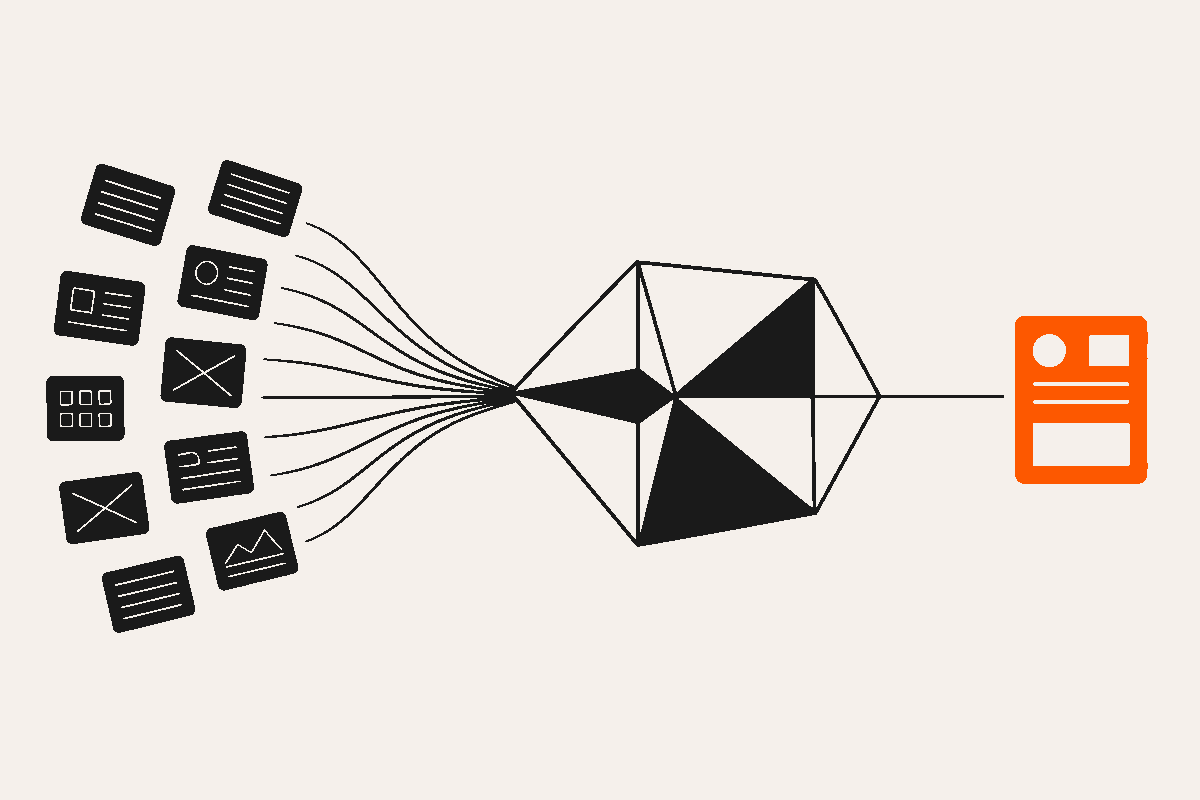
AI search engines answer a question in three steps: they retrieve information from web pages, reviews, directories, and other sources, they synthesize that material into one coherent answer, and they cite the handful of sources they drew from. A business either appears among those citations or it is absent from the answer entirely.
First, the AI retrieves information from a wide range of sources. These include web pages, structured data, reviews, business directories, knowledge bases, news articles, and academic publications. Then it synthesizes that information into a single, coherent answer. Finally, it cites the sources it drew from, giving users a way to verify the information or learn more.
This is a fundamentally different experience from traditional search. In Google, a user sees ten organic results and decides which one to click. In AI search, the user gets one answer with a handful of citations. There is no page two. There is no scrolling through results. Either your business is mentioned in the response or it is not.
Being one of those cited sources is the new "page one." And because AI engines pull from so many different types of sources, the strategies for earning citations go beyond what traditional SEO covers.
What Actually Increases AI Citations?
Three page-level changes measurably increase AI citations: adding direct quotations, adding statistics, and citing sources. The GEO study presented at KDD 2024, the only controlled experiment on the question, measured lifts of 41%, 31%, and 30% respectively, while keyword stuffing produced no effect. At the brand level, third-party web mentions correlate with AI visibility three times more strongly than backlinks do.
| Tactic Tested | Measured Effect | Source |
|---|---|---|
| Adding direct quotations | +41% visibility in AI answers | GEO study, KDD 2024 |
| Adding statistics | +31% visibility | GEO study, KDD 2024 |
| Citing sources | +30% visibility, up to +115% for lower-ranked pages | GEO study, KDD 2024 |
| Keyword stuffing | No effect | GEO study, KDD 2024 |
| Branded web mentions | 0.664 correlation with AI mentions, vs 0.218 for backlinks | Ahrefs, 75,000 brands, 2026 |
Two details in that table deserve attention. The sourcing lift was strongest for pages that did not already rank well, up to 115%, which means a small business page can earn citations it could never earn rankings for. And the tactic that defined an era of bad SEO, keyword stuffing, does nothing here. The engines reward pages that read like evidence, not pages that read like optimization.
This article practices what it cites: question-shaped headings, self-contained answers, statistics with named sources. That structure is not cosmetic. It is the format the retrieval systems extract most reliably, and it is the same structure we apply to client pages.
How Is GEO Different From SEO?
SEO earns rankings in a list of search results, while GEO earns citations inside a generated answer. The two disciplines overlap, and strong SEO creates the foundation for GEO, but the levers differ in four places: content structure, entity recognition, source authority, and what gets a page picked as a citation.
Traditional SEO focuses on ranking in Google's organic search results. You optimize pages for keywords, earn backlinks, improve site speed, and structure content so that Google's crawler can index it effectively. Success is measured by where you rank for your target terms.
GEO focuses on being included in AI-generated responses. This requires a broader set of tactics because AI engines pull from more diverse sources and evaluate information differently. Here are the key differences:
- Content structure. SEO rewards long-form content that keeps users on the page. GEO rewards content that provides clear, direct answers that AI can extract and cite.
- Entity recognition. SEO cares about keywords. GEO cares about entities. AI engines need to understand what your business is, what it does, where it operates, and how it connects to related concepts. Consistent business information everywhere it appears is what makes this possible.
- Source authority. In SEO, authority comes primarily from backlinks. In GEO, authority comes from being consistently mentioned across multiple credible sources: directories, reviews, press, industry publications, and your own website.
- Citation patterns. AI engines tend to cite sources that provide unique, specific, verifiable information. Generic content that repeats what everyone else says is less likely to be cited than content that offers original data, expert perspective, or a clear point of view.
The bottom line: SEO gets you ranked. GEO gets you cited. Both matter, and doing one well makes the other easier.
Why Does GEO Matter in 2026?
GEO matters in 2026 because AI answers now sit in front of a meaningful share of buying research, and each answer cites only a handful of sources. ChatGPT counts its weekly users in the hundreds of millions, Google places AI Overviews above the organic results on a growing share of queries, and Microsoft has embedded Copilot across its product line. A business absent from those citations is absent from the answer.
This is not a niche trend. It is a mainstream shift in how people find and evaluate businesses. When a potential customer asks ChatGPT "What is the best digital marketing agency in Austin?" or tells Perplexity "Find me an SEO company that works with small businesses," your brand either shows up or it does not. There is no second page to scroll to.
If your competitors are being cited by AI search engines and you are not, you are losing visibility in a channel that is growing every quarter. The businesses that start optimizing for AI now will have a compounding advantage over those that wait.
The early adopter window is still open. Most businesses have not even thought about GEO yet, which means the opportunity to establish your brand as a trusted AI source is real and actionable today.
How Do You Optimize for AI Search?
Optimizing for AI search means doing five things: writing content that answers questions directly with quotable facts, building topical depth, earning mentions on sites AI engines trust, keeping business information consistent everywhere it appears, and matching the conversational way people phrase questions. No single tactic carries the program alone. Here is each one.
Answer Questions Directly, With Evidence
AI search engines are designed to answer questions, and the KDD 2024 results above show what they prefer to extract: passages containing quotations, statistics, and named sources. Content that provides clear, self-contained, well-evidenced answers gets pulled into AI responses. Content that buries the answer under filler does not.
The working format is simple. Write headings as questions. Follow each one immediately with a short passage that answers it completely, names its subject instead of leaning on pronouns, and carries a number or a fact worth quoting. If someone asks "What does a digital marketing agency do?" and your page answers that in one extractable paragraph, an AI engine can cite you. If the answer is smeared across 500 words, it cannot.
Where Schema Markup Actually Fits
Schema markup keeps its place on your site because it helps Google understand your business as an entity, which supports both regular rankings and the knowledge graph AI systems draw on. What schema is not, on current evidence, is a GEO lever: no major AI platform has confirmed using structured data for citation decisions, "AI schema" is not a real standard, and neither llms.txt files nor content "chunking" services have evidence behind them. Keep Organization, LocalBusiness, Service, and Article markup accurate for Google's sake, and be skeptical of anyone selling schema packages as AI optimization.
Build Topical Authority
AI engines favor sources that demonstrate deep expertise on a topic. A single blog post about SEO is not enough. A comprehensive content library that covers SEO fundamentals, advanced strategies, industry-specific applications, and related topics like GEO and SEM signals to AI that you are a genuine authority.
This is the content cluster model. You create a pillar page that covers a broad topic, then build supporting pages that go deeper into subtopics. Internal links connect everything. Over time, AI engines recognize the depth of your coverage and are more likely to cite you when users ask questions in your area of expertise.
Get Cited on Authoritative Sites
AI engines cross-reference information across the web. When your business is mentioned on well-known directories, industry publications, review platforms, and news sites, those mentions serve as trust signals. Each credible source that references your brand reinforces the AI's confidence that your business is legitimate and relevant.
This goes beyond traditional link building. Even unlinked brand mentions on authoritative sites can influence how AI engines perceive your business. Directory listings on platforms like Google Business Profile, Clutch, Yelp, and industry-specific directories all contribute to your entity's footprint in AI training data and retrieval systems. For a step-by-step guide to one of the most important listings, see our article on Google Business Profile optimization.
Maintain Consistent NAP and Brand Info
NAP stands for Name, Address, and Phone number. AI engines cross-reference your business information across every source they can find. If your company name is listed differently on your website, your Google Business Profile, your Yelp page, and your LinkedIn, that inconsistency creates confusion. The AI becomes less confident about which information is correct, and that uncertainty can cause it to leave you out of its response entirely.
Audit every platform where your business appears. Make sure your name, address, phone number, website URL, and business description are consistent. This sounds basic, but it is one of the most commonly overlooked factors in AI visibility.
Optimize for Conversational Queries
When people use AI search, they ask questions the way they would ask another person. They do not type "digital marketing agency Austin TX." They ask "Can you recommend a good digital marketing agency in Austin that works with small businesses?" or "What should I look for when hiring a marketing agency?"
Your content should match this conversational tone. Write headings as questions. Include natural language phrases in your content. Think about the full range of questions a potential customer might ask at each stage of their decision-making process, and make sure your content addresses them.
Do GEO and SEO Work Together?
GEO and SEO work together because they feed the same pages: GEO is an extension of SEO, not a replacement for it. The fundamentals of SEO, meaning technical health, high-quality content, backlinks, fast load times, and mobile optimization, all feed directly into how AI engines select their sources.
A website that ranks well in Google is more likely to be cited by AI search engines because Google's organic results are one of the data sources that AI tools draw from. Strong SEO gives your content the authority and visibility it needs to be discovered by AI retrieval systems.
Where GEO adds to SEO is in the areas that traditional search optimization does not prioritize: fact-dense passages built for extraction, entity consistency across the web, conversational content formatting, and presence on platforms that AI engines specifically trust. Think of GEO as the additional layer you build on top of your SEO foundation.
Our AI optimization service is designed to work alongside your existing SEO strategy, not replace it. The two disciplines reinforce each other, and businesses that invest in both will see the strongest results across traditional and AI search.
Getting Started with GEO
The first step is to understand where you stand today. Run an AI visibility audit by searching for your brand and your core services in ChatGPT, Gemini, and Perplexity. Ask questions that your ideal customers would ask. Take note of whether your business appears in the responses, which competitors show up instead, and what sources the AI cites. Our overview of AI SEO tools covers the software categories that can take over parts of this work once you know what you are looking for.
From there, work through this checklist:
- Review your content for Q&A format. Can AI easily extract clear answers from your pages? Do your headings match the questions your audience is asking? Does each answer carry a fact, a number, or a source worth quoting?
- Check your structured data for accuracy. Organization, LocalBusiness, Service, and Article schema should describe your business correctly for Google's entity understanding. Fix what is wrong, and skip anything sold as "AI schema."
- Check your directory listings. Are you listed on the major directories and review platforms? Is your business information consistent across all of them?
- Assess your content depth. Do you have comprehensive content on your core topics, or just a few thin pages? AI engines favor sources that cover a topic thoroughly.
- Evaluate your brand mentions. Search for your brand name across the web. Are you being referenced on credible, authoritative sites beyond your own?
We offer AI optimization services that cover every part of this process. From structured data implementation to content strategy to directory management, we help businesses build the kind of online presence that AI search engines trust and cite.
Frequently Asked Questions
Is GEO the same as SEO?
No, but they are closely related. SEO focuses on ranking in traditional search engine results. GEO focuses on getting your business cited in AI-generated responses from tools like ChatGPT, Gemini, and Perplexity. Strong SEO creates a foundation for GEO, but GEO adds tactics of its own: fact-dense content built for extraction, entity consistency across the web, and third-party mentions on sites AI engines trust.
How do I know if AI search engines mention my business?
Search for your business name and your core services in ChatGPT, Gemini, and Perplexity. Ask questions your ideal customers would ask, such as recommending a business in your industry and location. Take note of whether your brand appears in the responses, which competitors show up, and what sources the AI cites.
Does Google Business Profile help with AI search visibility?
Yes. Google Business Profile is one of the data sources AI engines use to verify business information. A complete, accurate, and actively maintained profile with reviews, photos, and regular posts strengthens your entity's presence in AI training data and retrieval systems.
How long does GEO take to work?
GEO results vary depending on your starting point. Businesses that already have strong SEO and consistent directory listings may see improvements in AI citations within a few months. Building entity recognition from scratch takes longer because AI engines need time to discover and cross-reference your information across multiple sources.
Is GEO worth it for small businesses?
Yes, especially for local service businesses. AI search users tend to ask specific, high-intent questions like recommending a provider in their area. Small businesses that establish their entity in AI systems early will have an advantage as more consumers shift from traditional search to conversational AI tools.
AI search is not a passing trend. The technology is improving, adoption is accelerating, and the share of search traffic flowing through AI tools will only increase. The businesses that adapt now will build an advantage that compounds over time. Those that wait will find themselves playing catch-up in a channel where early movers have already established credibility.
If you want to understand how your business appears in AI search and what it would take to improve your visibility, . We will show you exactly where you stand and build a plan to get you where you need to be.